Badlands
The Master Butchers Singing ClubThe Badlands is a landscape of refuge and danger in the story Roy tells Delphine about Minnie’s childhood. The region lies along the route of a group of Minneconjou Lakota fleeing toward Wounded Knee; for Minnie, crossing it leads to the massacre of her father and others, and to the long walk by which she survives.
Setting and Route
Roy recounts that Minnie and her Cree father join Lakota people traveling south through the Badlands. Her father has been sent by his people to learn about the Ghost Dance movement, which its followers hoped would bring the dead back to life. The group first meets Hunkpapa Lakota traveling toward the village of Chief Hump, then joins Minneconjou people who are trying to return home.
The travelers eventually lack food and shelter and reach the steep bluffs of Medicine Root Creek. There, Major Samuel M. Whitside persuades them to proceed under a white flag of surrender to a military camp at Wounded Knee. The Badlands thus form part of a forced and precarious passage: the group is displaced from home, short of provisions, and dependent on the decisions of military authorities.
Minnie’s Journey Through the Region
Minnie travels with her father, who brings his youngest daughter while leaving the others behind. As Roy tells it, the Badlands journey is not a solitary adventure but part of a community’s attempt to survive and return home. At the camp, Minnie’s father shares their last piece of bannock with a woman who has offered them shelter. The woman later shares a small gingerbread figure and prepares a drink from a root for Minnie.
The violence begins as Minnie is drinking the tea. Her father runs outside and is killed; Minnie reaches him long enough to hear his last words and feel his life end. She then escapes from the camp, moving through a ravine and later under a wire fence. Roy’s account connects the open terrain of the Badlands with the dangers of the camp and the routes of flight beyond it: Minnie survives by leaving the immediate scene and continuing on foot.
Violence, Escape, and Memory
Roy describes Minnie witnessing soldiers attack people fleeing the camp, including women and children. She is not pursued in the same way, Roy suggests, perhaps because her farmer’s clothing and appearance distinguish her from the Lakota people around her. The account does not present the Badlands as protection from violence; rather, the landscape offers Minnie a route away from it while holding the sights that she will never forget.
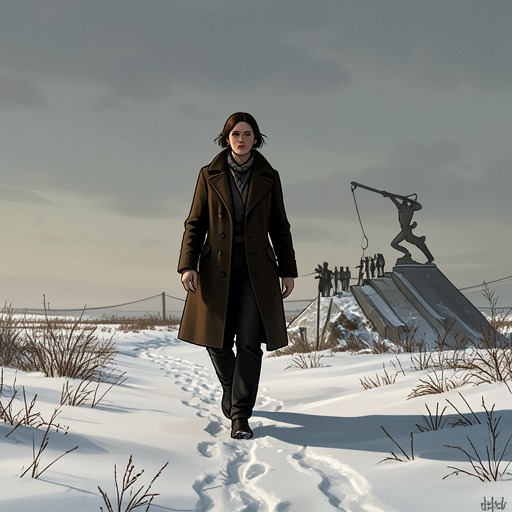
Minnie follows the tracks of other people fleeing through the snow. When she falls too far behind to see them, their footprints remain a guide. She keeps walking until she reaches a mission run by a priest named Jutz. Her survival depends on movement through the region and on traces left by others, while the journey becomes part of the traumatic past that Roy later recounts to Delphine.
Narrative Significance
The Badlands is presented through Roy’s retrospective storytelling, not as a detached geographical description. His narrative places Minnie’s personal history within the larger flight of Lakota people toward Wounded Knee, and links a route through the region to the violence of military confinement and massacre. The landscape’s significance lies in this conjunction of displacement, exposure, and escape: it is where a community seeks a way home, where Minnie loses her father, and where the tracks of other fugitives help her survive.